International engagement
Soilo attends an India–Saudi entrepreneurship MoU signing
· By Soilo · Story date
Soilo attends an MoU-signing occasion involving the DPIIT/Startup India ecosystem and Monsha’at, Saudi Arabia’s small and medium enterprises authority.
5 minute read · Published 21 October 2026 · Updated 21 October 2026
Company update
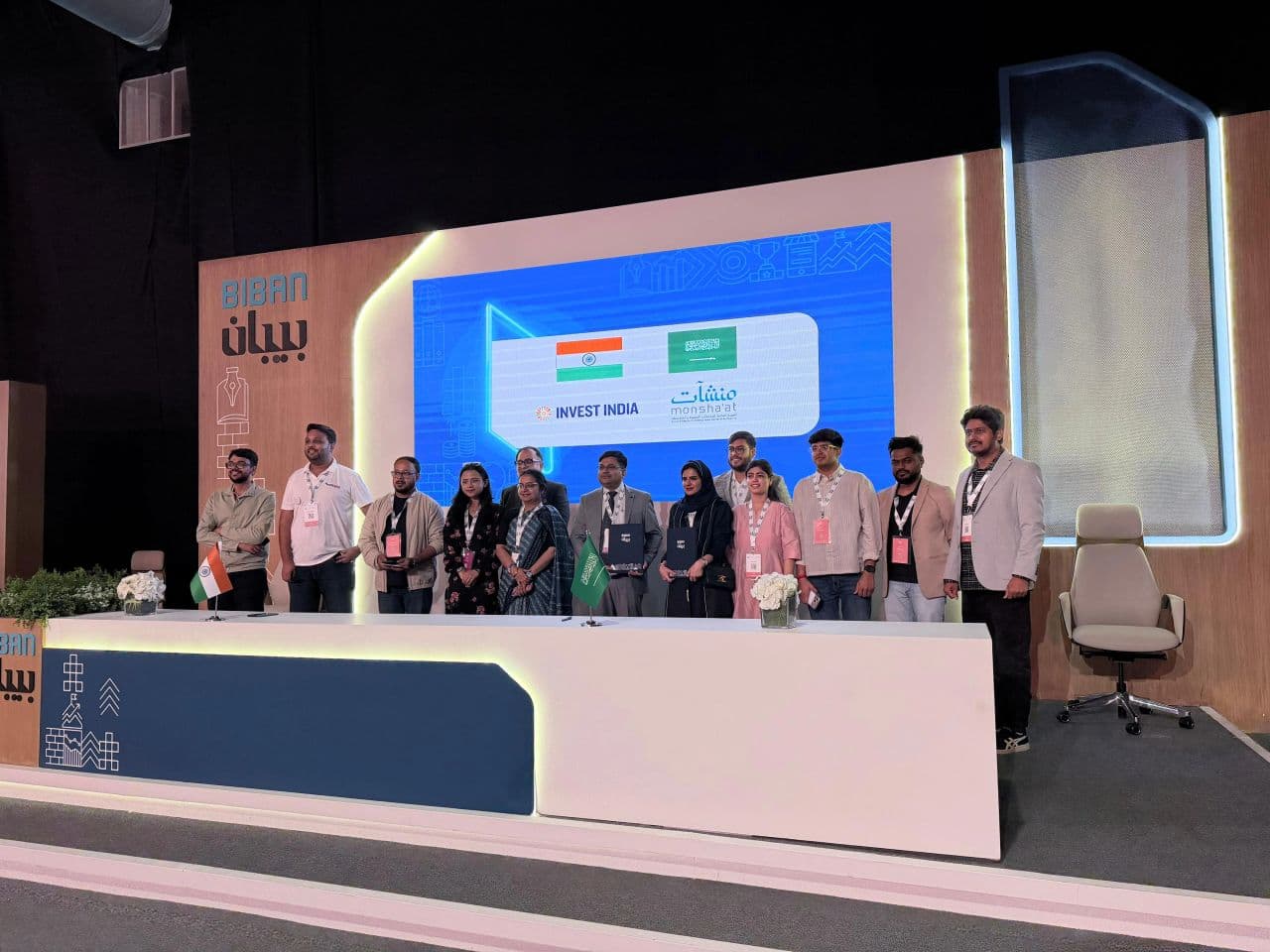
Soilo attended an India–Saudi entrepreneurship MoU-signing occasion involving the DPIIT/Startup India ecosystem and Monsha’at, Government of Saudi Arabia. The photograph supplied with this update records the occasion. This was an institutional signing attended by Soilo, rather than an agreement signed by Soilo.
Participation in an institutional cooperation setting
On 8 November 2025, Soilo attended the MoU-signing occasion described in the supplied update as involving the DPIIT/Startup India ecosystem and Monsha’at, Government of Saudi Arabia. The stage photograph is preserved with the story. The role being reported is attendance at the institutional occasion. It is distinct from a claim that Soilo signed the document, represented either institution or received a specific commercial entitlement under its terms.
The relevance for a startup is the setting for wider entrepreneurship cooperation. Institutions and businesses can meet around shared interests while retaining different responsibilities. The practical opportunities for a company still need to be explored through its own conversations and appropriate agreements. The background below explains that distinction and considers the partner and international-market questions that can follow an introduction. It gives readers a clearer understanding of why an institutional event can matter without adding an unreported undertaking by Soilo or interpreting the legal effect of a document that has not been supplied for publication.
Background: building a useful partner relationship
A partner relationship works best when the parties understand the contribution expected from each other. One organisation may bring knowledge of local customers or agricultural practice. Another may bring product development, training materials or technical support. A discussion becomes more useful when those contributions are made specific. Who will explain the device to an end user? Who will coordinate a question after delivery? Which information can be shared, and for what purpose? These practical questions help move a relationship beyond a photograph or an introductory meeting towards a set of responsibilities that can be discussed and, where appropriate, agreed.
The same care applies to public language. A visiting team, a customer, a distributor and an institutional host are not automatically the same type of relationship. Describing the occasion accurately protects the meaning of each contribution. A company visit can be celebrated as a visit without implying exclusivity, a formal investment or a new contract. An exhibition conversation can be recognised without describing the other party as an approved reseller. Where a commercial agreement exists, its scope should be communicated through the appropriate process. Where an update describes an introduction or a celebration, the story should remain faithful to that description.
Soilo’s supplied updates repeatedly thank people who introduced the company to new users, offered feedback or supported its work. Those acknowledgements are meaningful because a developing hardware business does not operate in isolation. Relationships can help a team understand how its product is explained and where further clarification is needed. The continuing responsibility is to listen, confirm expectations and communicate limits as carefully as benefits. That is a practical foundation for collaboration across countries as well as within a local ecosystem. A promising relationship becomes more useful when both sides can identify the next appropriate action without having to rely on assumptions about what the other side has already committed to do.
Institutional signatories and startup attendees have different roles
The central distinction in this story is straightforward: Soilo attended an India–Saudi entrepreneurship MoU-signing occasion; it was not a signatory to the institutional agreement. The supplied account connects the occasion with the DPIIT/Startup India ecosystem and Monsha’at, Government of Saudi Arabia. The photograph records the setting, while the date of 8 November 2025 was confirmed for the story. Those sources support a report of attendance without creating a bilateral agreement between Soilo and either institution.
A memorandum of understanding can describe an intention to cooperate, but its detailed legal effect depends on its actual text and the parties involved. This article does not reproduce or interpret clauses that were not supplied. It also does not claim that the document automatically gives an attending startup access to funding, procurement, visas or a regulated market. Those outcomes would require their own evidence and applicable procedures. The company’s presence is worth recording without assigning benefits that the source does not establish.
Institutional cooperation can still matter to entrepreneurs. It may create a context in which people from different ecosystems meet, exchange information and identify appropriate contacts. A startup can use an introduction to understand where a future conversation belongs. That potential is different from a completed collaboration. A company-specific project would need identifiable participants, a practical scope, responsibilities and agreement on the information being shared. Describing those steps helps an international reader understand why attendance can be useful without overstating its consequences.
For an agricultural hardware business, possible follow-up topics could include customer needs, technical suitability or the support required for a field workflow. These are examples of sensible market-development questions, not a report of work commissioned through the MoU. The signing photograph should not be treated as proof that Soilo’s device was evaluated by a Saudi authority, approved for every use or selected for an institutional programme. Product and regulatory assessments remain separate from event participation.
The archive also keeps this occasion separate from the India–Saudi Innovation and Unicorn Roundtable on 12 November 2025. The two stories involve a related institutional environment but are not interchangeable. One describes attendance at a signing; the other describes an invitation to a discussion with ministries, investors and companies. Separate pages preserve the distinction, keep photographs connected to their supplied accounts and prevent a reader from assuming that every person named in one story participated in the other.
Readers interested in a commercial relationship with Soilo can contact the company with a defined need. The appropriate conversation begins with the intended application, available evidence and the work to be scoped. It does not begin with an assumption that a wider institutional MoU already includes the company or its customer. This makes the news entry useful as a historical record while leaving commercial decisions grounded in the parties and services actually involved.
The source photograph is kept with this attendance account so the occasion can be reviewed in its original visual context. The archive does not extract institutional logos from that image to advertise a partnership. Readers should distinguish the identities visible at a public event from the named parties to any agreement they may later enter with Soilo.