The People Behind Soilo: A Team Lunch and the Work We Share
· By Soilo · 6 minute read
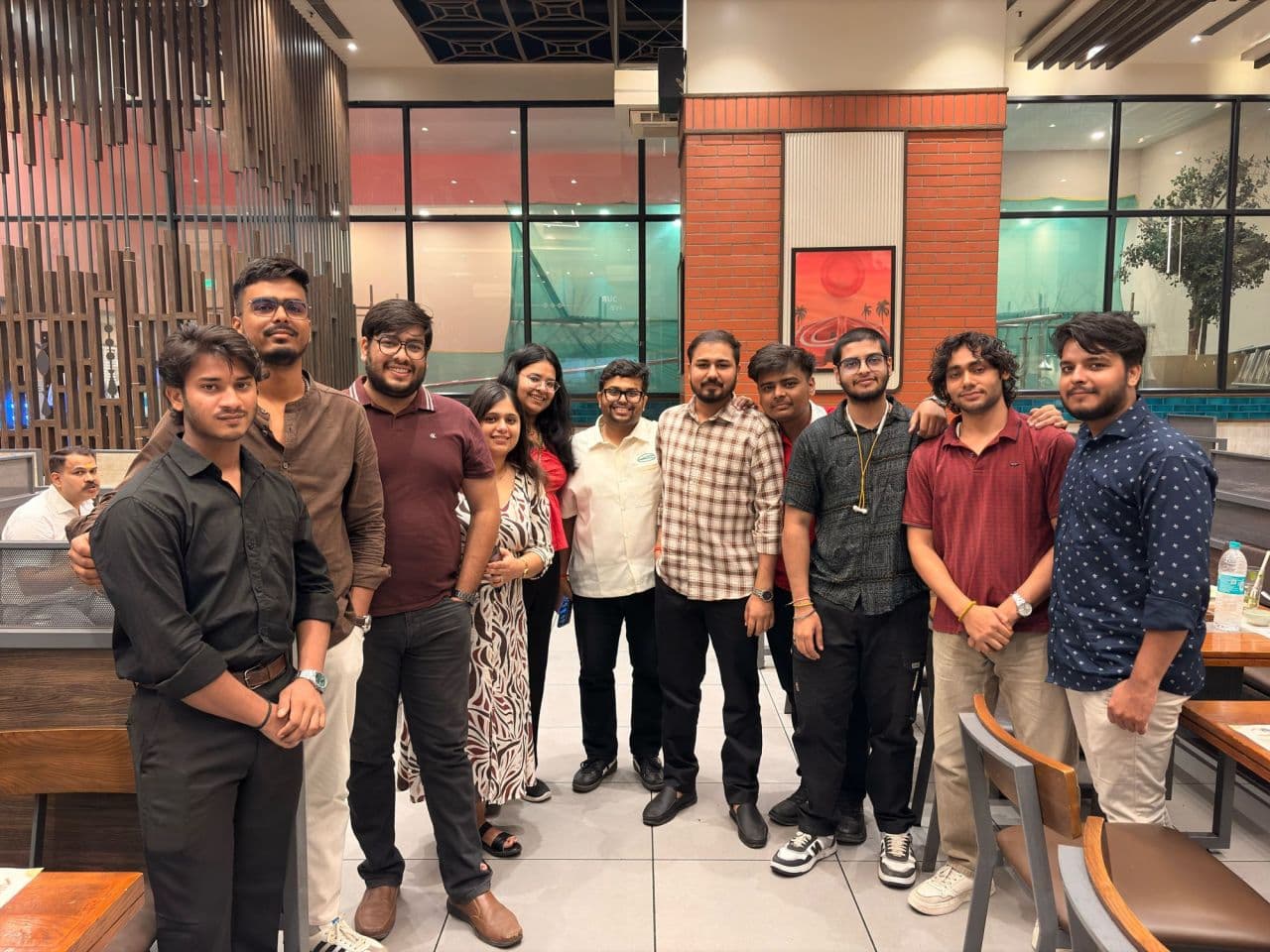
A device can be photographed, a software update can be announced and a milestone can be written into a company profile. The people responsible for those outcomes are not always as visible. At Soilo, we wanted to take a moment to show the team behind the work, not during an exhibition or a product launch, but during something much simpler: lunch together.
There was no grand announcement attached to the afternoon. It was an opportunity to leave our usual routines for a while, share food, talk without an agenda and spend time with colleagues who ordinarily meet around deadlines, product discussions and customer requirements. That may sound like a small occasion, and it was. It is also the kind of occasion that helps a young company stay connected to the people who make its ambitions possible.
Every Soilo product passes through many hands
When someone sees a finished Soilo device, they see an enclosure, a set of sensing elements and an application that displays information. They do not see the long chain of work behind it. A device begins with an understanding of the problem a user wants to solve. It moves through design choices, component selection, electronics, firmware, assembly, testing and software integration. It then has to survive real use outside the workshop, where a field operator needs the experience to be clear and practical.
That journey requires people with different skills to work towards the same result. Hardware engineers focus on electrical design, power behaviour, interfaces and the limitations of sensing systems. Firmware developers make the electronics communicate reliably. Application developers work on pairing, data capture and reporting. Manufacturing and quality colleagues try to make sure the device reaching a customer behaves as expected. None of those contributions can be substituted by an attractive product photograph.
Customer-facing colleagues bring another kind of expertise. They hear the questions that do not always occur during development: What should a user do before a test? What happens without internet access? How should a reading be interpreted? What if a unit has difficulty charging, connecting or producing a consistent result? Those conversations return to the technical team as information that can change the next version of a workflow. The product improves when the organisation can listen across departments.
Building across functions, not inside silos
The daily reality of a young hardware and software company involves a surprisingly broad range of work. One team may be investigating a technical issue while another is preparing a shipment. Someone else may be reviewing a customer report, discussing a new market, arranging a demonstration or making sure an invoice is ready. Problems often cross those boundaries. A delay in component supply affects production; a firmware change affects testing; a new software workflow changes what the customer-support team must explain.
We have learned that good coordination is not simply a matter of assigning tasks. People need enough context to understand how their work affects someone else's. A customer issue should not be passed from one person to another without ownership. An engineering improvement should reach the colleagues responsible for installation and training. A new product promise should be discussed with the team that must manufacture and support it. These are ordinary operating disciplines, but they are essential if a company wants to serve customers consistently.
Shared meals do not solve technical problems. They do create space for the conversations that make it easier to solve those problems together later. Colleagues have a chance to know one another beyond a role or a ticket. That matters when the next complicated issue arrives and several people need to cooperate under pressure.
The culture we are trying to build
For us, culture is less about slogans on an office wall and more about behaviour when nobody is writing a company update. It appears in the willingness to review a colleague's work, in the patience to explain a problem properly, in owning a mistake rather than hiding it and in recognising when someone else's contribution made the result possible. Building useful environmental technology is demanding enough without making collaboration unnecessarily difficult.
We want Soilo to be a place where people can ask precise questions and challenge assumptions. A hardware test that fails should lead to a better design, not a search for someone to blame. A customer complaint should be understood as information, even when it is inconvenient. A software feature should be assessed by whether it improves the user's experience, not simply by whether it can be added to a list of capabilities. Those habits develop through repeated choices, not through a single workshop.
At the same time, people need room to be people. Teams cannot operate only through targets and escalations. We spend a significant portion of our working lives with one another. Making time for a conversation unrelated to the next delivery can help preserve perspective and give colleagues the chance to enjoy the journey they are building together.
A young team learning in public
Soilo operates in areas where expectations are understandably high. Farmers and agronomists need information they can use responsibly. Organisations working on environmental monitoring need clarity about sources and limitations. International customers need documentation and support that make sense outside India. Meeting those expectations is a learning process, especially as products and markets evolve.
We do not expect every answer to arrive immediately. We do expect ourselves to keep improving how we work. That means testing carefully, communicating clearly and accepting that the customer sees one Soilo, regardless of which team was responsible for an individual step. It also means treating feedback from the field as part of product development rather than as an interruption to it.
The people in our team bring different experiences and perspectives. Some are more comfortable around circuitry and laboratory instruments. Others spend their days with interface designs, databases, calls, purchase orders or shipping documents. What connects those roles is a shared effort to turn environmental information into something practical. We believe the work becomes stronger when each contributor understands that purpose.
Beyond this lunch
A photograph from a team lunch cannot show the whole story of a company. It does show something important: behind the public-facing name is a group of individuals who come to work, learn, disagree, try again and keep moving forward. We are grateful for the people who choose to spend their time and energy building Soilo with us.
We will continue to recognise product releases, customer relationships and important events. We also want to recognise the less visible work that makes those announcements possible. Sometimes the most worthwhile company update is not about a new market or an impressive statistic. Sometimes it is about the people who made it through a demanding week and still have stories to share over lunch.
To Team Soilo, thank you for the focus you bring to ordinary work, the ownership you show when challenges appear and the consistency that keeps the company moving. We have many things still to learn as a business. Having colleagues who care about the quality of their work makes that journey both possible and worthwhile.
This afternoon was a small pause in a much larger effort. Tomorrow brings back the devices, code, customers, tests and unanswered questions. We will return to them as a team, and that is what made taking time together worth celebrating.