From a City Upbringing to Indian Agriculture: The Thinking Behind Soilo
· By Soilo · 6 minute read
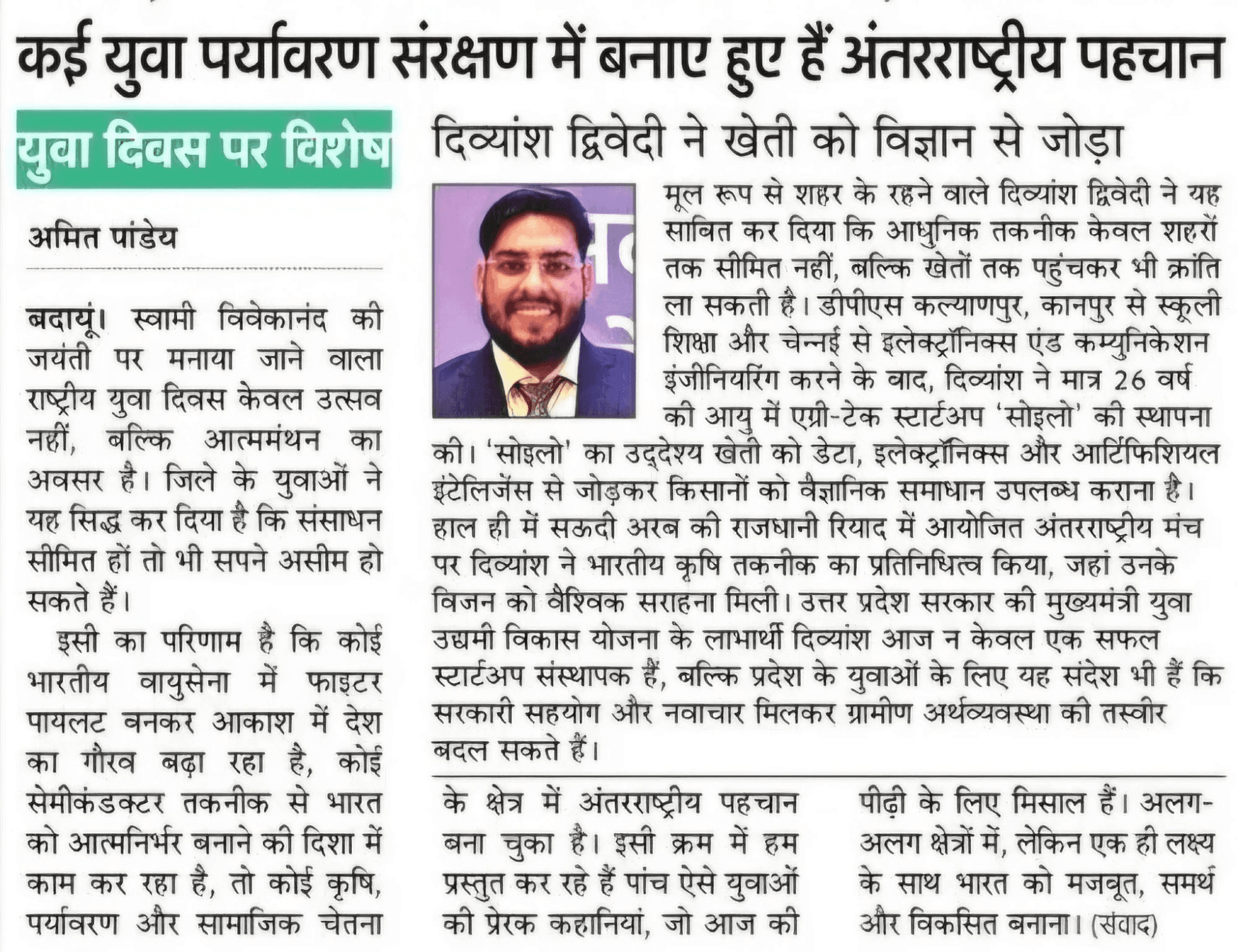
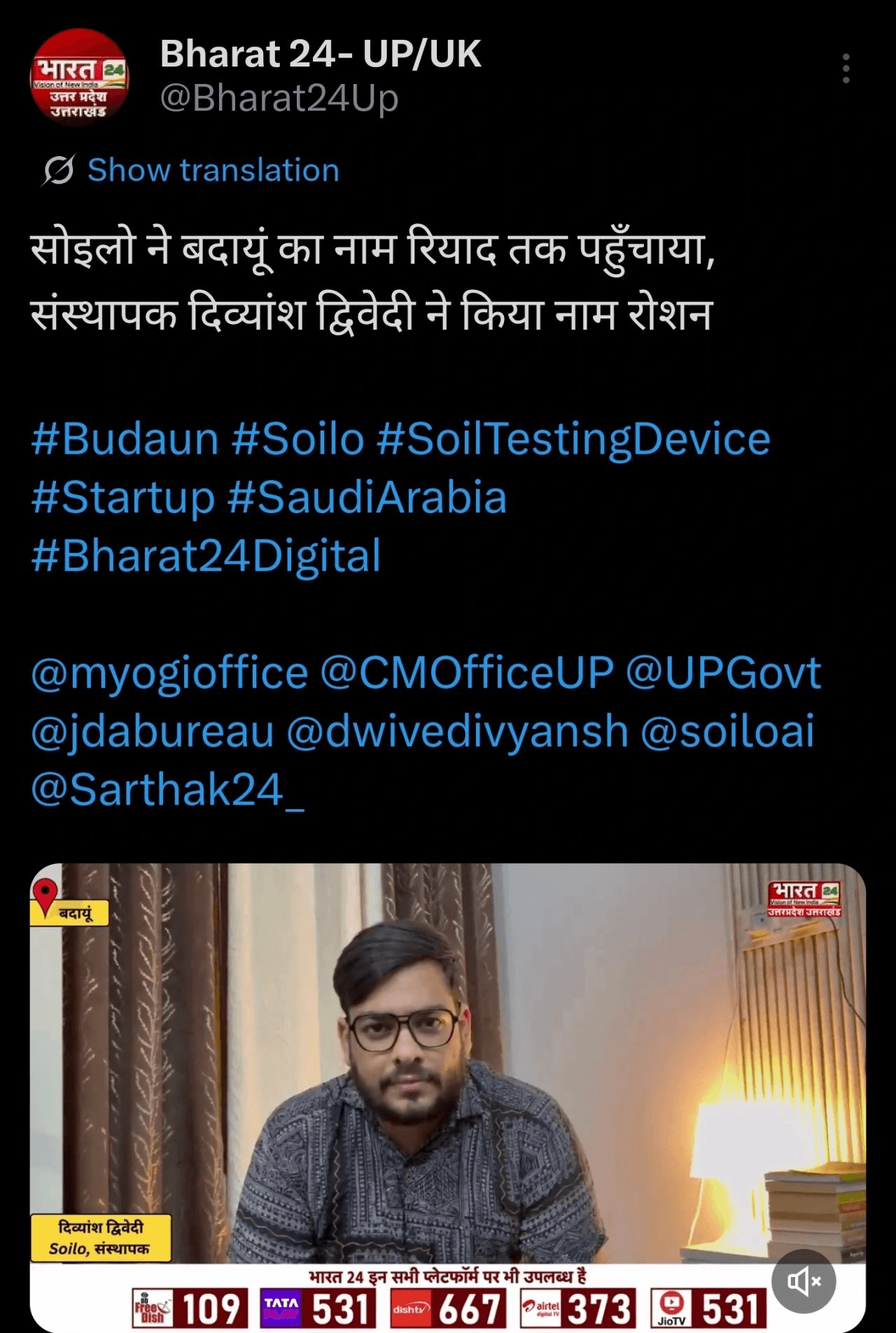
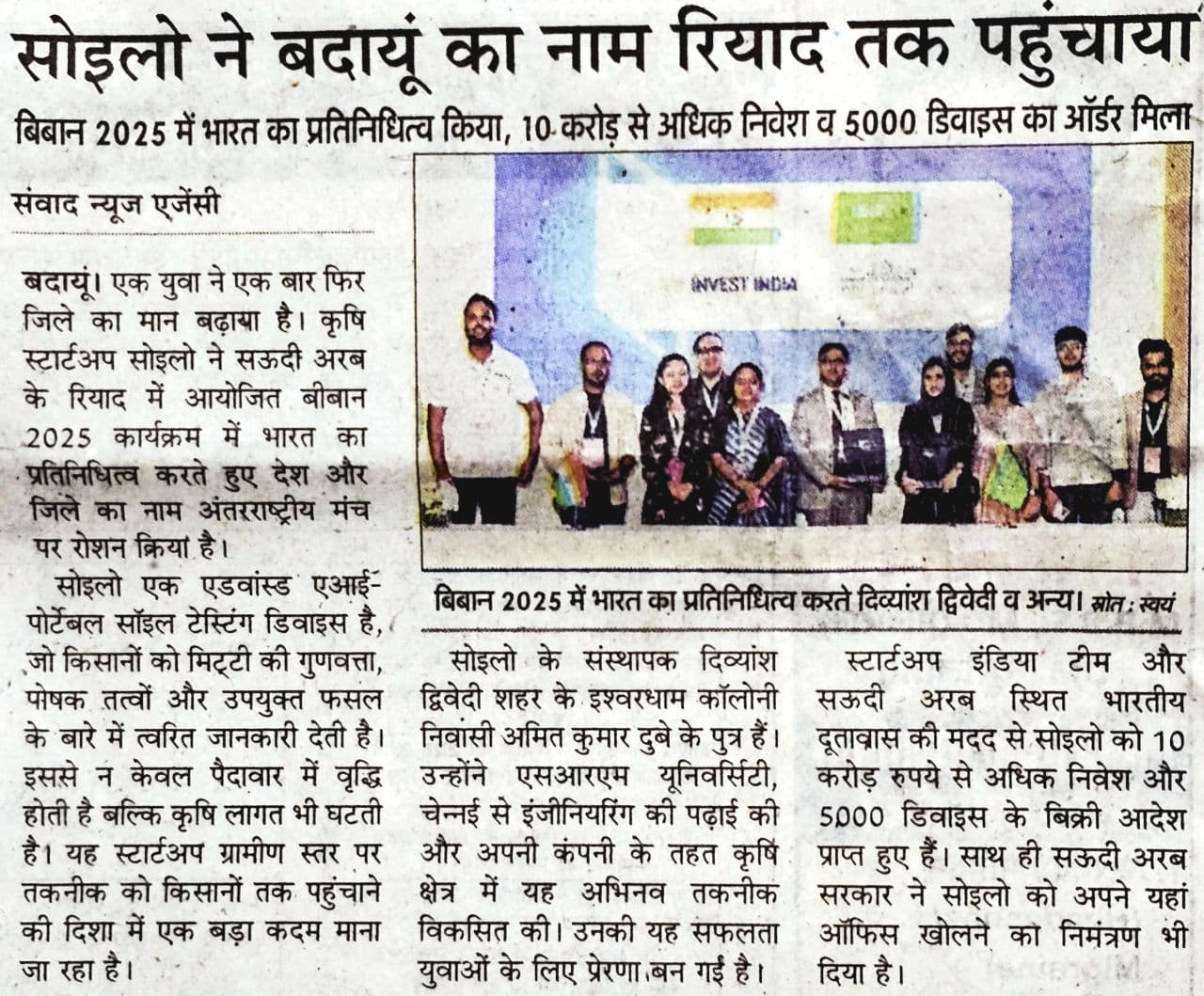
A newspaper feature in March 2026 brought attention to a part of Soilo's journey that may not be obvious from looking at our devices: the company was founded by a young entrepreneur whose early life was shaped more by the city than by a traditional agricultural background. Our founder, Divyansh Dwivedi, did not begin with the assumption that technology alone could explain the complexities of farming. He began with a question about access to useful information and a conviction that engineering and data could help address a problem experienced in the field.
The feature was an encouraging moment for our team. It connected our present work with the thinking that started it: why should distance, cost or complexity make soil information difficult to use? Could a portable device and a digital workflow help people work with field observations more conveniently? And what would it take to build that technology in India, where agriculture supports so many livelihoods? These questions remain central to Soilo, even as our product portfolio and ambitions evolve.
Why an outsider's question can lead to useful work
A person approaching agriculture from a technical background has much to learn. Soil is not a uniform material, and agricultural decisions cannot be made sensibly without understanding crops, field history, climate, water availability and cultivation practices. That complexity is exactly why we have tried to build Soilo around field feedback rather than around laboratory assumptions alone.
We believe technology has an important role, but only when it respects the experience of the people already working with the land. Farmers and agronomists understand local conditions that a software system cannot automatically infer. A device can contribute readings and records. The interpretation still needs context, and some questions require laboratory analysis or specialist judgement. Bringing technology into agriculture is therefore an exercise in collaboration as much as invention.
For our founder, entering this space meant learning from people whose daily work was different from his own. That process influenced the company's focus on accessibility and usability. A product intended for field use must work for someone who has other priorities, limited time and no reason to tolerate unnecessary complexity. A technically sophisticated feature is not valuable unless it helps with an actual task.
The idea that became Soilo
Soilo began with a portable soil-intelligence concept and the ambition to connect field observations with useful digital information. Building that concept required work across hardware, sensing methods, firmware, mobile software and product design. Early prototypes helped us identify possibilities, but they also revealed limits. Components had to be chosen carefully, the physical device had to be robust enough for its intended use and the reporting process had to be understandable.
The work also introduced questions that are fundamental to responsible agricultural technology. How should a sample be collected? Which parameters are directly measured? Which are estimated using models or other information? How should a user understand an unusual result? When is another testing method necessary? These questions cannot be answered through marketing copy alone. They require technical documentation, testing and continuous learning from the people using the product.
We are still working on improving these areas. A young technology company develops through iteration. Each customer conversation, field observation and engineering problem reveals something about the next version. That willingness to revise assumptions is a strength we want to preserve as Soilo grows.
Taking data beyond a single measurement
The newspaper feature highlighted the role of AI and data science in the company's work. For us, these technologies are most useful when they help people organise, interpret or compare information without obscuring where it came from. A system should not turn an estimate into an apparent direct measurement or make an unsupported claim seem more certain because it appears in a polished report.
Our broader direction is to connect ground-level observations with software workflows that can support agriculture and environmental management. Such systems may help people maintain digital records, review patterns and share information with relevant stakeholders. But a useful digital record still depends on sampling quality, correct context and clear methods. We want to keep those foundations visible.
This is particularly important because agricultural decisions can have financial consequences. Input choices, crop management and further testing may all involve costs. A field tool should therefore help users become better informed, not encourage them to abandon careful judgement. We believe the best applications of AI in agriculture will support people who already carry the practical responsibility for their land.
Building from Uttar Pradesh with a wider ambition
The story also reflects our commitment to developing technology from India. Soilo is rooted in Uttar Pradesh and has an ambition to serve users in many markets. That means designing around agricultural needs at home while learning how different environments affect product requirements. The challenges faced by a farmer in one country may be related to those in another, but local conditions can differ considerably.
Our international experience has made the importance of those differences clear. A device used across regions needs dependable documentation, support and an honest explanation of the conditions under which a result should be interpreted. Product development cannot stop at the moment of sale. Manufacturing quality, software maintenance and customer feedback remain part of the same responsibility.
We are proud that an idea developed in India has found interest outside the country. We are equally aware that the trust behind that interest has to be earned repeatedly. A customer deciding whether to use a field device should receive practical guidance and accurate information, not a promise that technology has removed every uncertainty from agriculture.
What the media attention meant to our team
Seeing our journey described in a newspaper was meaningful because much of the work behind Soilo is not visible. Engineers may spend days investigating an issue that is never announced publicly. Manufacturing colleagues may correct a process that prevents future failures. Customer-facing teams may spend hours explaining a result or helping an operator complete a test. These contributions are essential to the company, but they are rarely part of a headline.
The feature gave us an opportunity to thank the people involved in that work and the customers who have provided useful feedback. Public attention can encourage a young team, but it also increases the importance of accurate communication. We want anyone reading about Soilo to understand both the purpose of the technology and the care required to use environmental information responsibly.
We also hope our experience encourages people from different educational and professional backgrounds to consider problems outside their immediate familiarity. Curiosity can lead someone into a new field. The important next step is to listen, learn the subject carefully and work alongside people who understand the realities of that field.
Continuing to earn a place in agriculture
Our story is not about replacing agricultural knowledge with technology. It is about bringing engineering and data tools into a field where reliable information matters, then learning how those tools can become genuinely useful. We want to make soil intelligence more accessible while respecting the role of established testing methods and expert interpretation.
The March 2026 newspaper feature captured a chapter in that journey. We are grateful for the attention and for the people who helped make the work worth covering. We remain committed to building practical products, refining them through evidence and expanding our understanding of the environmental problems we can responsibly address.
A city upbringing may have shaped the questions that led our founder towards agriculture. The answers, however, have to come from the ground, the people working with it and the discipline of building technology that earns their trust. That is the work we intend to keep doing at Soilo.