Soilo CEO Joins the Jury at Hack The Beginning 2026 in Greater Noida
· By Soilo · 6 minute read
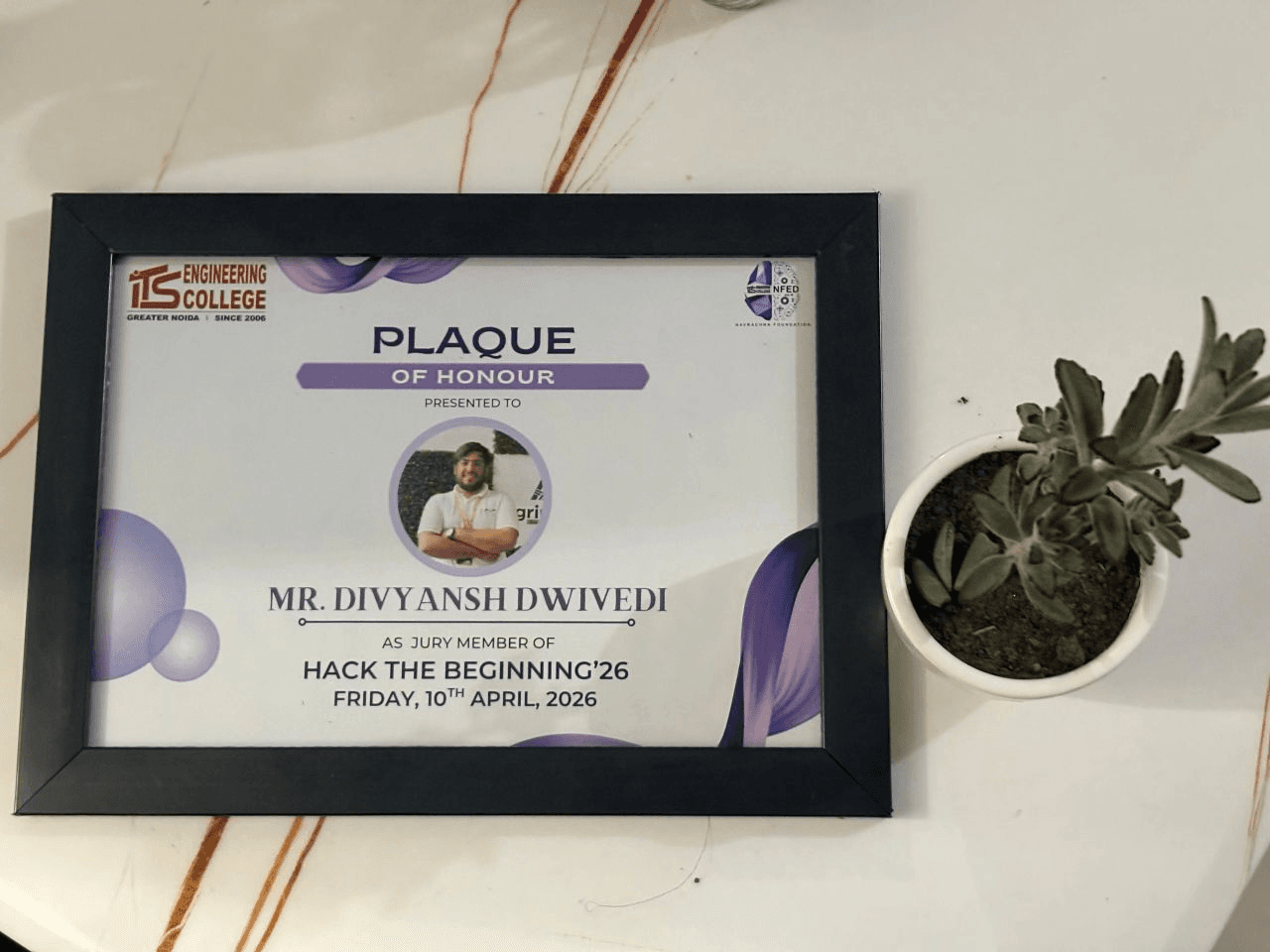
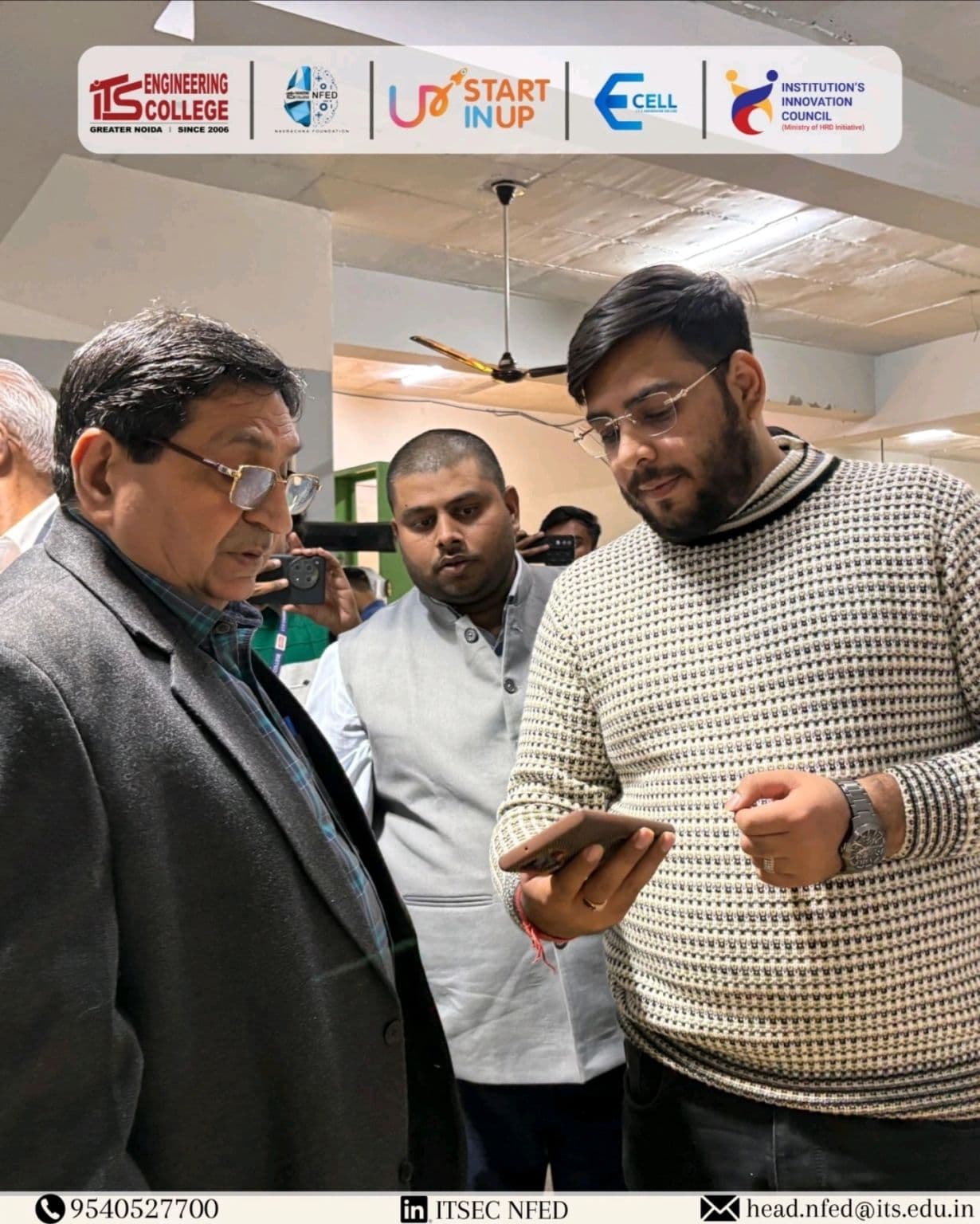
At Soilo, we know what it feels like to stand in front of someone and explain an idea that is not yet fully formed. You have spent time building, testing and revising something that you believe could solve a meaningful problem. Now you have a few minutes to show how it works and why it matters. That experience makes opportunities to support young innovators particularly important to us. On 10 April 2026, our founder and CEO, Divyansh Dwivedi, had the honour of serving as a jury member at Hack The Beginning 2026, organised by I.T.S Engineering College in Greater Noida.
The event gave student innovators the chance to present ideas and demonstrate their work. For Divyansh, participating on the jury was an opportunity to see that familiar combination of enthusiasm, uncertainty and determination from a different perspective. It was also a reminder that constructive feedback, given at the right moment, can be valuable to someone who is still learning how to turn an idea into a product.
Remembering what it means to begin
Soilo began with a belief that useful environmental information should be easier to obtain and understand. The early work involved asking technical questions, building prototypes and learning from tests that did not always produce the expected results. We discovered that it is one thing to imagine how a device should work and another to make it reliable enough for repeated use by someone outside the development team.
That experience shapes how we view student innovation. An early prototype should not be expected to meet every standard of a mature product, but it should be understood honestly. Which part works? Which part is simulated? What assumptions have been made? What evidence supports the proposed benefit? What would the team test next if given more time? A thoughtful answer to these questions often reveals more about a project's potential than an elaborate presentation.
We appreciate events that give young people the chance to encounter those questions in a supportive setting. The purpose of a hackathon or innovation showcase is not only to select winners. It is also to help participants improve their way of thinking about problems, technical choices and users.
What makes feedback useful
Good feedback should be specific enough to act upon. Telling a team that an idea is impressive may offer encouragement, but it does not necessarily help the team make its next decision. Asking how a result was measured, why a particular architecture was chosen or what would happen in a real operating environment can reveal a useful next experiment.
We have benefited from this kind of questioning at Soilo. Customers have challenged our assumptions about field use. Technical reviewers have helped us look more closely at hardware and software behaviour. Colleagues have identified steps that were too complicated or documentation that needed improvement. We are a better company when we treat those observations seriously, even when the first reaction is uncomfortable.
On a jury, there is an opportunity to offer that perspective constructively. Student teams deserve to be taken seriously, which means engaging with the problem they are trying to solve rather than simply judging the confidence of their presentation. The aim should be to recognise good thinking, identify important gaps and encourage a disciplined next step.
Entrepreneurship is a technical learning process
For many students, entrepreneurship is introduced through business models, pitches and competitions. Those are useful skills, but building a company also requires patience with details. A hardware product needs components, testing and manufacturing methods. A software product needs reliability, usability and responsible handling of data. A solution intended for a regulated or scientifically demanding field must be clear about its evidence and limitations.
The same principle applies to sustainability-related ideas. An attractive environmental claim is not a substitute for a method that can establish what changed. A prototype that estimates a parameter should describe the estimation process honestly. Teams can develop ambitious ideas while still being precise about what their demonstration proves. Learning that distinction early prepares founders for more demanding conversations with customers and institutions.
Our experience at Soilo has reinforced that entrepreneurial progress often comes through ordinary work that is not particularly visible: checking a component, revising a workflow, improving a report or resolving a support issue. The strongest teams learn to value that work as much as a successful pitch.
The role of engineering colleges and student communities
Institutions such as I.T.S Engineering College play an important part in making innovation possible. They bring together students, faculty, laboratory resources and communities interested in building new solutions. When colleges create opportunities for practical demonstrations and outside feedback, they help connect classroom knowledge with the demands of real-world use.
We are grateful to the E-Cell ITSEC and ITSEC NFED teams for organising the event and inviting Divyansh to participate alongside fellow jury members. Such programmes require a great deal of work from organisers and mentors, and their effects can extend well beyond the event itself. A student who learns to defend a design choice today may become a stronger engineer, founder or researcher tomorrow.
For young people considering entrepreneurship, meeting people who have built products can also make the path feel more tangible. It shows that a company is not created in one step. The work involves uncertainty, revision and many small decisions. A founder's first idea may change significantly by the time it reaches users, and that is often a sign of learning rather than failure.
What we hope young innovators take away
We would encourage every student working on a new product to begin by understanding the user. Speak to people who experience the problem. Observe the environment in which the solution would operate. Distinguish assumptions from results. Keep records of tests, including the unsuccessful ones. Build the smallest useful version that can answer an important question, then decide what should come next.
Collaboration matters just as much. Technical projects increasingly cross boundaries between electronics, software, data and operations. The ability to explain a problem clearly to someone from another discipline is a real advantage. Teams that can accept criticism without losing their sense of purpose are better prepared for the challenges of product development.
And perhaps most importantly, do not confuse recognition with completion. A certificate, an award or a strong jury response can encourage further work. The real test arrives when the solution is used by someone who was not part of its development. That is when clarity, dependability and support become critical.
A meaningful day for our founder and our team
Divyansh's participation at Hack The Beginning 2026 was a proud moment for Soilo because it allowed us to contribute to the same kind of entrepreneurial environment that has helped our company grow. We were glad to see young innovators bringing conviction and energy to their work, and we appreciate the organisers for creating a place where that work could be examined and encouraged.
We remain students of the same process ourselves. Soilo is still learning through engineering challenges, customer conversations and the realities of operating across markets. Supporting young founders does not mean we have finished our own journey. It means we recognise the value of thoughtful feedback and want to share what experience has taught us so far.
Our thanks go to I.T.S Engineering College, E-Cell ITSEC, ITSEC NFED, the other jury members and the participating teams. We hope every student left with more than a result from a competition: a clearer understanding of what to test, whom to listen to and how to make the next version better. That is how useful innovation grows.