Behind the Camera: Sharing Soilo's Journey With Times Now
· By Soilo · 6 minute read
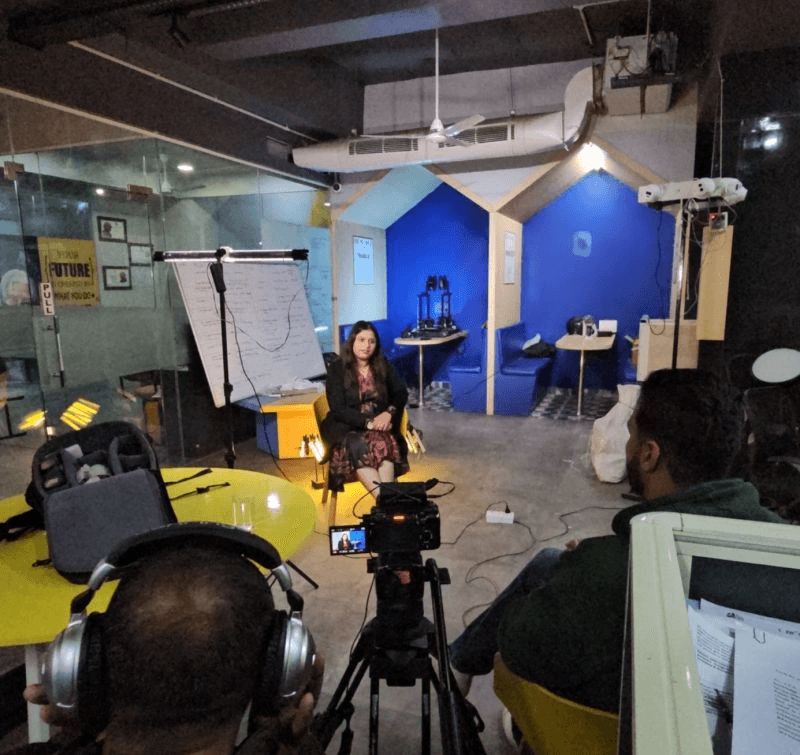
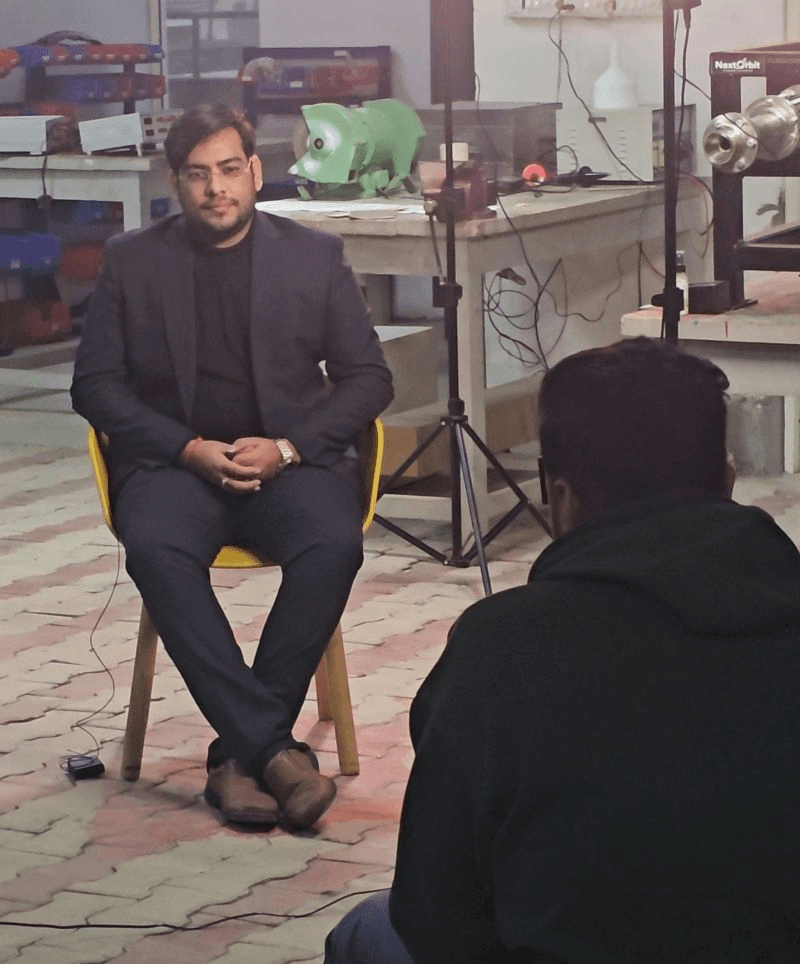
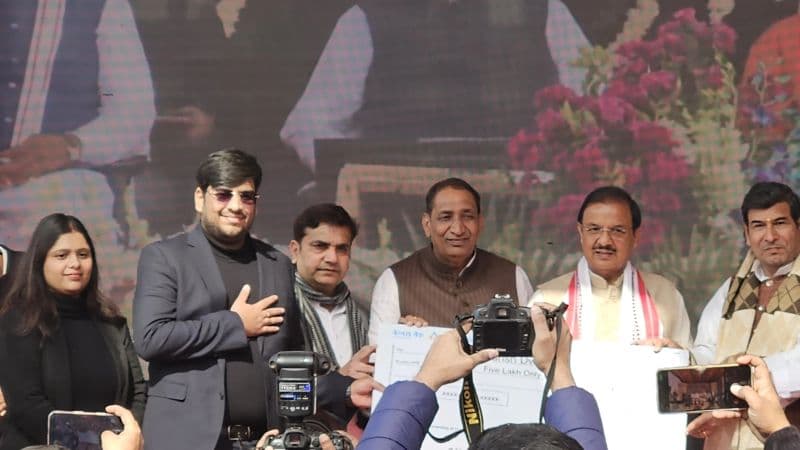
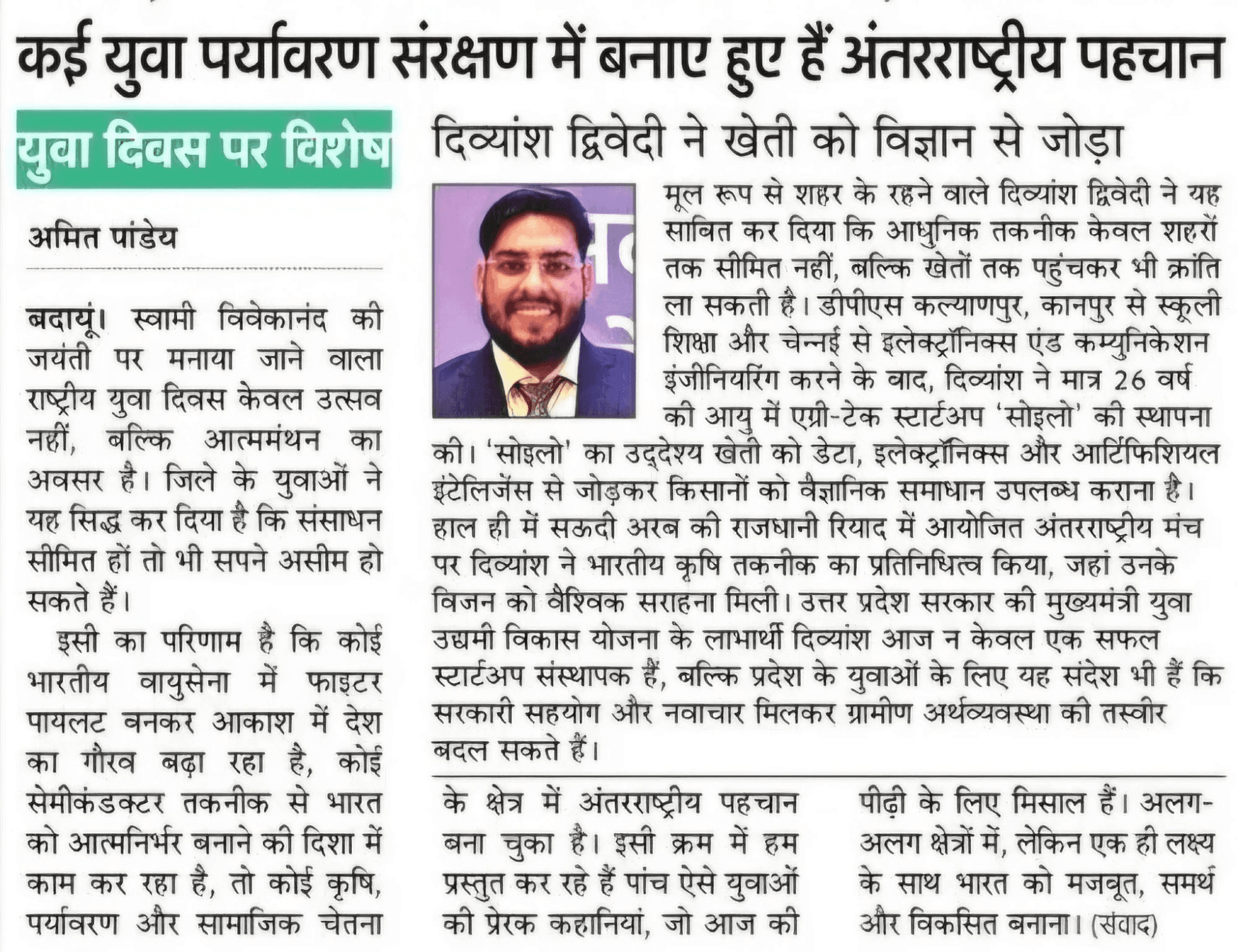
When the cameras arrived to record our story for Times Now, the occasion felt special for reasons that had little to do with television. It offered an opportunity to reflect on the people, uncertainty and decisions behind Soilo, and on what it means to build a young technology business in Uttar Pradesh. Our founder, Divyansh Dwivedi, shared the company's journey, including its experience of receiving support under the Government of Uttar Pradesh's CM Yuva scheme and the work involved in developing a hardware and software product from the ground up.
For our team, the recording was a reminder that public attention usually arrives after a long period of work that most people never see. Before there was an interview, there were sketches, prototypes, failed tests, late discussions, manufacturing challenges and customer conversations. We were grateful for the chance to speak about that reality. The filming photographs document the recording process; they should not be treated as a claim about a particular broadcast date unless that schedule is separately confirmed.
What people do not see in a product announcement
Soilo began with a practical challenge: how could useful soil information become easier to obtain, understand and use? Farmers, agronomists and field teams often make decisions that would benefit from timely observations, yet access to testing and interpretation can be uneven. We wanted to explore whether portable technology, supported by software, could make some field-oriented information more accessible.
Turning that idea into a product required much more than designing a device. The electronic system had to be developed and tested. Firmware had to work with the application. Mechanical parts had to fit together and be assembled consistently. The software had to present information in a way that customers could follow. As the company began serving users, we also had to build processes for training, documentation, delivery and technical support.
A media interview can condense this journey into a few minutes. The real process is longer and less predictable. It includes choices that later need revision and days when a small technical issue consumes more time than expected. We think those experiences deserve to be part of the conversation about entrepreneurship, because they are where a young company learns what it can reliably offer.
The importance of CM Yuva support
Soilo's experience under the CM Yuva scheme was an important part of the story we shared. For a young business, access to an environment that supports enterprise development can make it easier to plan and build. Our founder has described the sanction under the scheme as both practical support and encouragement that a locally built technology venture deserves to be taken seriously.
We are grateful to the Government of Uttar Pradesh for initiatives intended to encourage youth entrepreneurship and MSME development. Such programmes matter because starting a business involves substantial uncertainty. Founders need to develop the product while also learning about manufacturing, finance, compliance, hiring and customer relationships. An ecosystem that recognises those needs can make entrepreneurship more accessible.
At the same time, government support does not remove the responsibility of the business to perform. A sanctioned scheme is not a guarantee of product success, and it does not certify technical claims. It is an opportunity that a company must use responsibly. For Soilo, that means focusing on what we build, how we test it and whether users receive genuine value.
Building an MSME with a product at its centre
Manufacturing-led startups have particular requirements. A software feature can sometimes be revised and released quickly, but changes to a physical product may affect components, inventory, assembly procedures, firmware and testing. Each improvement has to be considered in relation to the hardware that customers already have and the support they may need.
We have learned that building a dependable product company requires discipline across departments. Engineering decisions influence manufacturing. Customer feedback informs software priorities. Operations teams make sure products can be shipped and supported. Financial decisions influence how quickly the company can invest in improvements. These functions are closely connected, even when they are handled by different people.
Our goal is to develop that capability from Uttar Pradesh. We want to demonstrate that meaningful hardware and environmental technology can be designed, built and supported here while serving people in different markets. International ambition is important, but the foundation remains local expertise, careful production and a team willing to solve difficult problems.
The agricultural problem remains central
Whatever attention a television feature may bring, the original problem continues to guide our work. Soil and field conditions influence agricultural decisions, but the value of a result depends on its quality and interpretation. We are developing portable tools and digital workflows to help users work with observations more conveniently while acknowledging the role of laboratory testing and agronomic judgement.
It is important that users understand the distinction between direct sensing and model-supported estimates where both appear in a reporting workflow. It is also important to consider how a sample was collected and the conditions in which the device was used. A clear explanation of these factors can help prevent misunderstandings and support better decisions.
As Soilo expands its thinking towards broader environmental intelligence, that transparency remains essential. Software may organise data for agricultural management, environmental monitoring or enterprise reporting, but the evidence needed for each decision varies. We want our systems to help preserve relevant context rather than make complex requirements appear simpler than they are.
Why telling the story matters
We do not view public coverage as an end in itself. Its value is in helping people understand the problems that founders and teams are trying to solve. An interview can encourage a young engineer to explore product development. It can introduce a potential customer to a technology they had not considered. It can also make the challenges of entrepreneurship more visible to people who usually encounter only successful milestones.
We hope our experience adds something useful to that conversation. Building a company involves accepting uncertainty without accepting carelessness. A team needs ambition, but it also needs testing, documentation and the willingness to correct mistakes. Founders need confidence to begin and enough humility to change an approach when the evidence demands it.
The work also belongs to more people than the person speaking on camera. Our colleagues in engineering, manufacturing, software, operations and customer support have all contributed to Soilo's progress. They make it possible to stand in front of a camera and explain something that exists beyond a slide deck. We are proud of their contribution and grateful for the trust of early customers and partners.
Grateful for the opportunity, focused on the work
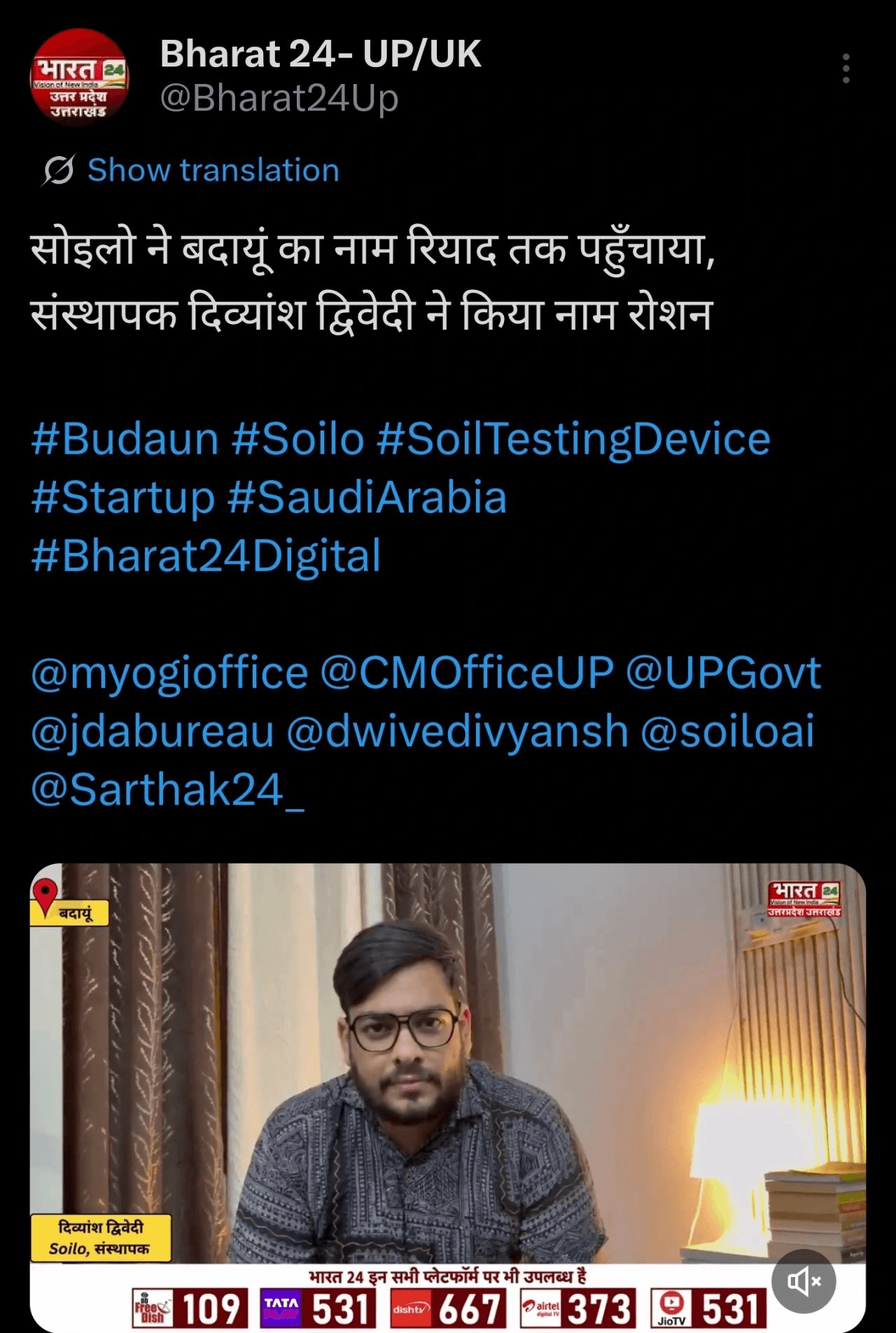
We thank the Times Now team for recording our story and giving us a platform to discuss the journey of a youth-led business in Uttar Pradesh. We also thank the Government of Uttar Pradesh and the broader startup ecosystem for encouraging entrepreneurship, along with the people who have guided and supported Soilo through its early development.
The filming day was memorable. But the most important chapter continues after the cameras are packed away. We return to improving devices, strengthening processes, supporting users and making environmental information more practical for the people who need it. That is how we intend to honour the opportunity to tell our story.
Soilo is still early in its journey. We have much to build and much to prove. The interview gave us a chance to explain where we started and why the work matters. The next chapters will be written through the quality of the technology and the trust we continue to earn.
Photo gallery